
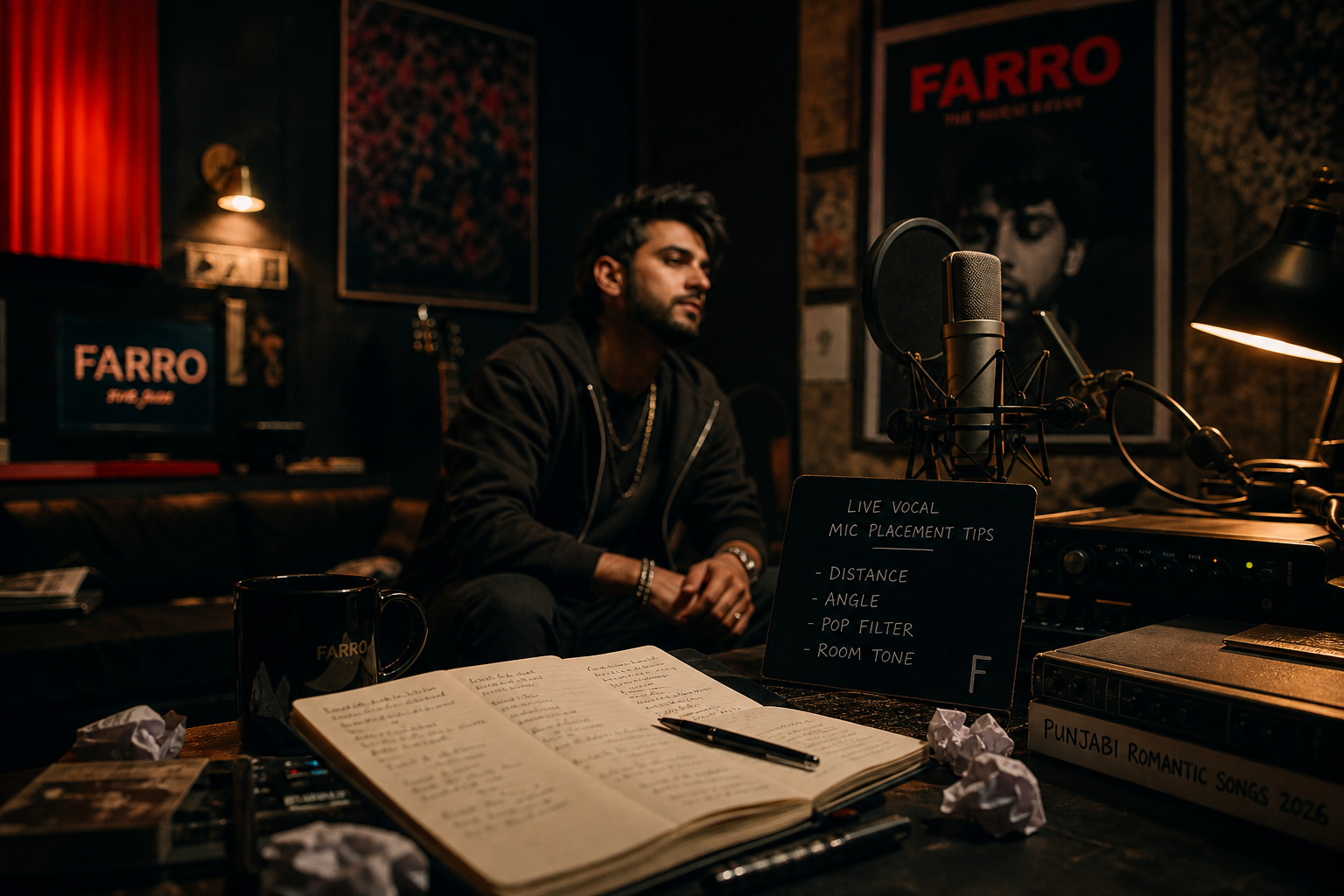
Hearing Punjabi Pop Music Without the Crowd
What Punjabi Pop Music Means in Practice
Punjabi pop music is not just a language label; it is a set of choices about melody, vocal emotion, rhythm, production, and audience memory. For Pakistani and Indian listeners who already move between Urdu, Hindi, Punjabi, romantic ballads, and Desi R&B, the useful question is not “Is this purely Punjabi?” but “What feeling does the Punjabi element carry, and how does the song use it?” That is the difference between casually naming a genre and making listening, playlisting, or songwriting decisions you can defend.
On Farro, this conversation sits naturally beside Urdu pop, Punjabi heartbreak, and regional-language songwriting because modern South Asian pop rarely lives inside one clean box. A song may use Punjabi phrasing for direct emotional impact, Urdu for poetic tenderness, Hindi for wider familiarity, and R&B-inspired production for late-night intimacy. If you are a listener, that helps you understand why one song feels like a drive-time anthem while another feels private and heavy. If you are an independent artist or songwriter, it helps you decide what the language is doing before you chase the surface sound.
A practical definition is this: Punjabi pop music uses the emotional and musical identity of Punjabi language or culture inside a pop format built for repeat listening. That format can lean romantic, danceable, sad, minimal, glossy, acoustic, or R&B-influenced. The language matters, but so do the hook, the vocal tone, the arrangement, and the moment where the listener is meant to feel recognized.
Use YouTube Videos as Listening Evidence, Not Just Promotion
For fans, YouTube is often where a Punjabi pop song becomes real: the official audio, visualizer, lyric video, or performance clip gives the song a setting. For artists, it also reveals decisions. A still-image official audio places attention on melody and vocal texture. A visualizer can push mood, memory, and color. A live-style clip may make the singer’s body language and mic control part of the story.
Farro’s YouTube videos page is useful here because it collects music in a way that lets listeners compare how different releases are framed. Instead of treating a video title as the whole story, listen for the job the format is doing:
- Does the first vocal phrase make the language feel conversational, poetic, or dramatic?
- Does the beat support movement, late-night listening, or heartbreak stillness?
- Does the visual format add meaning, or does it leave the song open for the listener’s own memory?
- Does the hook depend on the Punjabi line itself, or could the same melody work in another language?
That last question matters. Some songs simply place Punjabi words over a generic pop track. Stronger Punjabi pop usually makes the language feel structurally necessary: the vowel shapes, emotional weight, and phrasing affect how the hook lands.
Reading “MUSAFIR” as a Punjabi Pop Decision
“MUSAFIR — Farro | Official Audio | Latest Song 2026” gives listeners a useful way to think about Punjabi pop music without reducing it to a checklist. The title points toward movement, distance, and the identity of a traveler. Even before making any claim about the full lyric, that framing suggests a common South Asian pop tension: the song is not only about love, but about where the singer is emotionally standing.
For a listener, the decision is simple: place the song based on its emotional function, not only its language. If it feels like travel, separation, reflection, or searching, it may belong beside romantic Punjabi pop, Urdu emotional songs, or Desi R&B ballads depending on the production and vocal delivery. That is how real listening works. Playlists are not dictionaries; they are emotional maps.
For an artist, the lesson is sharper. If you choose a word or title that carries cultural and emotional history, the production has to respect it. A crowded beat can make a reflective idea feel rushed. A vocal that is too polished can remove the ache. A sparse arrangement can work if the melody has enough shape to hold attention. The defendable choice is the one where title, vocal, and arrangement point in the same direction.
Why “Dil Dukhda Ae” Belongs in the Heartbreak Conversation
“Dil Dukhda Ae – FARRO (Official Audio)” sits close to the emotional core of Punjabi pop: direct feeling. Heartbreak songs in Punjabi often succeed because they do not need to hide pain behind complicated language. The phrase itself signals hurt plainly, and that plainness can be powerful when the vocal performance is controlled rather than overacted.
This is where listeners can separate earned emotion from forced sadness. A song does not become deeper just because it sounds wounded. The stronger test is whether the singer leaves space for the listener. If every line is pushed at maximum intensity, the track may feel dramatic for one listen and tiring by the third. If the vocal lets certain words fall back, the listener can enter the song with their own memory.
Farro’s broader writing around sadness and heartbreak can help frame that experience. The article Why Do Sad Songs Feel So Good? explores why heartbreak music can feel comforting rather than only painful. For Punjabi pop, that explains why a sad song can become a repeat listen: the listener is not only hearing pain; they are organizing it.
If you write in Punjabi, Urdu, or Hindi, the practical correction is to avoid stacking every sad image at once. Choose one emotional pressure and let the hook return to it. A broken relationship, a missed call, a memory attached to a place, or the silence after an argument can each carry a full song. When everything is included, nothing lands.
“Na Samajh” and the Memory Layer in Desi Pop
“Na Samajh – A Song About Love, Loss & Memories | Visualizer” points to another part of Punjabi and Urdu-Punjabi listening culture: the song as a memory container. Some tracks are not built for the loudest hook in the room. They work because they create a private space around confusion, regret, and the things a person understands too late.
A visualizer can support that kind of song because it gives the listener atmosphere without forcing a fixed storyline. That matters for bilingual and regional-language audiences. One listener may hear the song through Punjabi emotional phrasing; another may connect it to Urdu-style reflection; another may simply feel the R&B/pop mood. The best version does not flatten those readings. It gives them enough room to coexist.
For independent artists, the decision is whether the visual layer should explain the song or deepen it. If the lyric already says the emotion clearly, the visual can stay restrained. If the lyric is abstract, the visual may need stronger cues: color, pacing, setting, or repeated imagery. Either way, the visual should not fight the vocal. In Punjabi pop music, the voice usually carries the trust.
For more on how romance is changing across Punjabi pop and related South Asian sounds, Farro’s Punjabi Romantic Songs 2026 piece is a useful companion because it treats love and longing as craft decisions, not just mood words.
What an Album Frame Like “After Love” Changes
“After Love — 2 May | Farro New Album 2026” changes the listening question from “Do I like this single?” to “What world is being built around these songs?” An album frame can make Punjabi pop feel more intentional because each track can hold a different stage of the same emotional arc: attraction, distance, denial, heartbreak, acceptance, or memory.
That matters for fans and artists in different ways. A fan may hear a single differently once it sits inside an album theme. A songwriter may realize that not every track has to carry the entire identity of the project. One song can be more Punjabi-forward, another more Urdu-pop leaning, another more Desi R&B in production, as long as the emotional thread is coherent.
The mistake is to treat variety as randomness. If a project moves between languages or styles, the transitions need a reason the listener can feel. Maybe the Punjabi phrases appear when the emotion becomes more direct. Maybe Urdu enters when the writing becomes more reflective. Maybe the beat opens up when the singer stops grieving and starts moving. Those are defendable choices because they connect sound to story.
This is also where Farro’s place inside Pakistani and Indian independent music matters. The broader context of Pakistani indie music shows why artists are not limited to one inherited format. Regional language, pop structure, and modern production can meet without the song losing its emotional center.
What should Pakistani and Indian listeners know about Punjabi pop music?
They should listen beyond the language tag. Punjabi pop can be romantic, sad, danceable, cinematic, or R&B-influenced. The better question is how the song uses Punjabi feeling: as a hook, as a memory trigger, as cultural identity, or as direct emotional speech.
How should a new listener get started?
Start with the mood you already like. If you enjoy heartbreak music, begin with slower Punjabi or Urdu-Punjabi songs and notice vocal restraint. If you prefer romance, listen for melody and warmth. If you like Desi R&B, focus on groove, space, and late-night atmosphere.
What mistakes should artists avoid when writing Punjabi pop?
Do not add Punjabi words only for flavor if the song does not need them. Do not over-sing every emotional line. Do not let the beat erase the lyric’s natural rhythm. The strongest choice is usually the one where language, melody, and production feel inseparable.
Can a Punjabi performance belong in an Urdu pop conversation?
Yes, when the audience, emotional style, or production language overlaps. Farro’s Urdu Pop coverage is relevant because many listeners do not separate Urdu, Punjabi, Hindi, and Desi R&B as rigidly as genre labels suggest.
Your Next Move With Farro
If you are a listener, use Punjabi pop music as a listening lens: ask what the language is doing, what the vocal is asking you to feel, and whether the production supports that feeling. If you are an artist or songwriter, make the same choices before release: decide where Punjabi belongs in the song, how much emotional space the vocal needs, and what format will help the audience receive it.
The useful takeaway is simple: a song becomes easier to defend when every element has a job. Punjabi phrasing, Urdu softness, Hindi familiarity, R&B space, pop hooks, official audio, visualizer, or album rollout should all point toward the same emotional truth.
To keep exploring Farro’s music, videos, latest releases, and the story behind the sound, visit Farro.
