
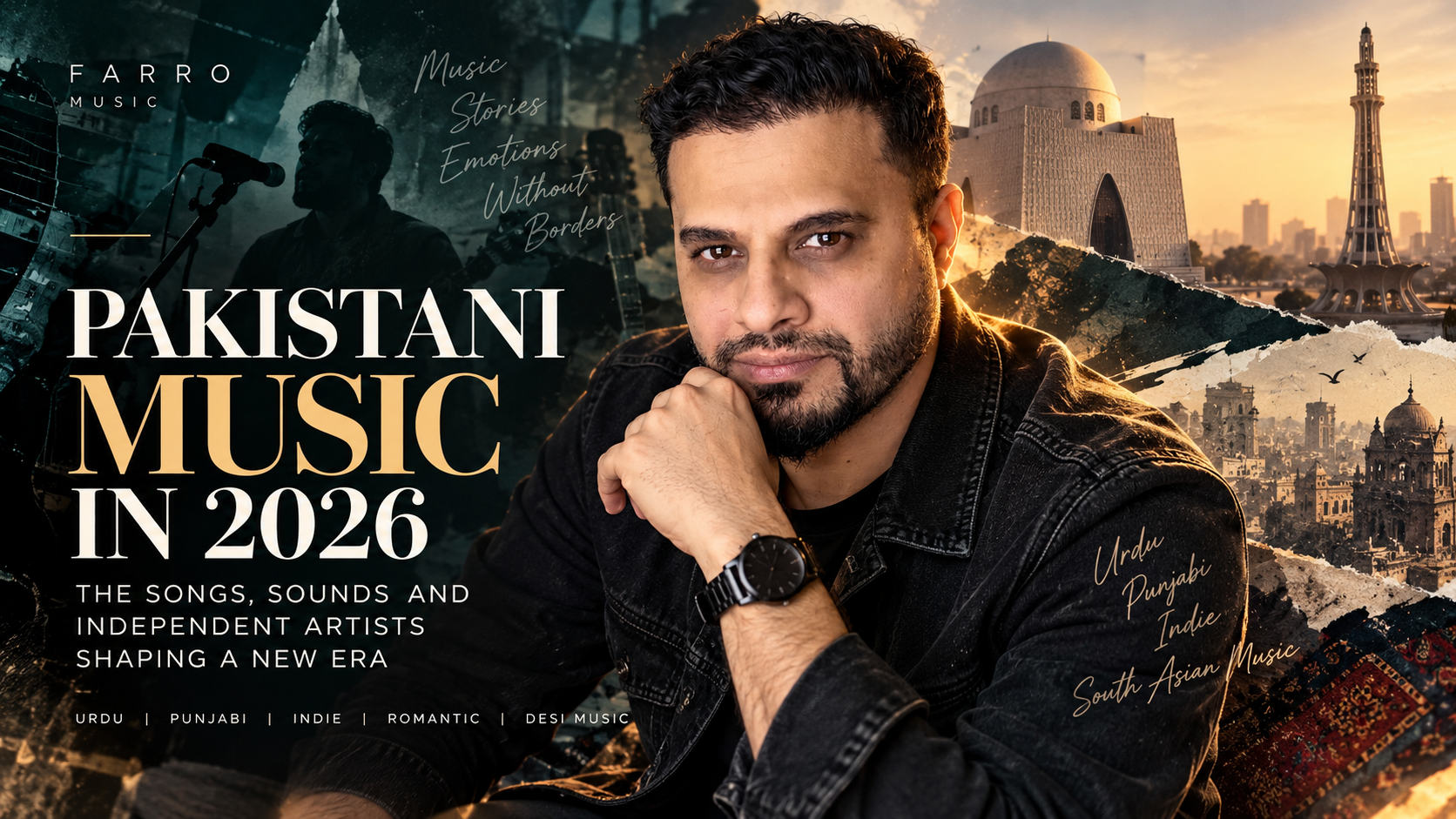
Pakistani Music in 2026: The Songs, Sounds and Independent Artists Shaping a New Era
Pakistani music in 2026 is much bigger than one genre, one platform, or even one country.
A listener searching for Pakistani songs today can move from Punjabi pop and Urdu indie music to hip-hop, romantic ballads, soulful songwriting, contemporary pop and experimental collaborations within the same listening session.
More importantly, listeners are increasingly discovering artists beyond the names they already know. According to Spotify, listening on its platform in Pakistan has grown by more than 750% since its local launch, while streams of Pakistani artists have increased more than sevenfold.
That tells us something important about the current music landscape: discovery has become part of the culture.
People are not only searching for famous artists anymore. They are searching for the next song that makes them feel something.
Pakistani Music Is No Longer One Sound
For years, international audiences often associated Pakistani music primarily with classical traditions, ghazal, qawwali and a relatively small group of established pop singers.
Those traditions remain an important part of Pakistan’s musical identity, but the modern landscape is much wider.
Today’s Pakistani music moves between pop, indie, hip-hop, Punjabi music, Urdu songwriting, electronic production, acoustic storytelling and traditional influences.
Artists can combine these influences without fitting neatly into one category. That is one reason searches for new Pakistani songs, Pakistani indie music and trending Pakistani songs have become an important part of modern music discovery.
Streaming has also made it easier for listeners to move from a major artist to a completely independent musician in only a few clicks.
Coke Studio Pakistan and the Global Discovery of Pakistani Music
Any discussion about modern Pakistani music discovery has to acknowledge Coke Studio Pakistan.
Its influence goes beyond individual hits. The platform has brought regional languages, traditional instruments, established performers and younger contemporary artists together in productions capable of reaching audiences far beyond Pakistan.
Songs associated with the Coke Studio ecosystem have introduced millions of listeners to Pakistani voices and sounds they might otherwise never have encountered.
But perhaps the most interesting part happens after somebody discovers one song.
A listener may arrive looking for Coke Studio Pakistan songs and then begin exploring the featured artist, similar singers, Urdu songs, Punjabi music, independent releases and related playlists.
That wider discovery journey creates an important opportunity for independent South Asian artists.
Urdu Songs Still Put Emotion at the Center
Urdu has a particular strength in music built around love, longing, separation, memories and emotions that are difficult to express directly.
That naturally connects the language with searches for Urdu romantic songs, Urdu love songs, Urdu sad songs, soulful music and emotional songs.
But modern Urdu music does not have to sound traditional.
Contemporary artists can place Urdu songwriting over pop, indie, electronic, acoustic or R&B-inspired production while preserving the emotional character of the language.
This creates space for independent musicians to build something modern without disconnecting from the language and culture behind the music.
Punjabi Music Continues to Cross Borders
Punjabi music is even harder to contain geographically.
Punjabi songs connect listeners across Pakistan and India and have an enormous audience among South Asian communities around the world.
That makes categories such as new Punjabi songs, Punjabi romantic songs, Punjabi love songs, Punjabi sad songs and Punjabi soulful songs powerful areas of music discovery.
The international growth of Punjabi music also demonstrates something larger: listeners are increasingly comfortable discovering music across borders, accents and production styles.
A great melody does not need a passport.
India and Pakistan Are Part of a Larger Digital Music Discovery Journey
The Indian and Pakistani music industries remain distinct, but digital listening creates significant audience overlap.
A listener in India can discover a Pakistani independent artist through Spotify, YouTube, Instagram or a recommendation. A listener in Pakistan can discover an Indian indie artist through exactly the same journey.
India’s independent music ecosystem has also expanded beyond the traditional film soundtrack model. This means Indian indie music, Pakistani independent music, Urdu music and Punjabi music increasingly exist within a larger South Asian discovery ecosystem.
For independent artists, this matters enormously.
Bollywood is not the only doorway into Indian music discovery, and mainstream television or film is not the only doorway into Pakistani music discovery.
An independent release can now travel because listeners share it, save it, add it to playlists, use it in short-form video and recommend it to other listeners.
What Are Music Listeners Actually Searching For?
Genre is not always the first thing a listener has in mind.
Often, the search begins with an emotion.
- romantic songs
- love songs
- sad songs
- breakup songs
- soulful songs
- emotional songs
- heart touching songs
- new Punjabi songs
- Urdu romantic songs
- Pakistani romantic songs
- trending Pakistani songs
These searches are interesting because they describe why somebody wants music rather than which artist they already know.
That distinction creates an opportunity for independent artists.
You do not necessarily need somebody to search your name first. Your song needs to become a relevant answer to what that listener is already trying to hear or feel.
The Rise of Pakistani Independent Artists
Streaming and digital distribution have weakened one of the oldest barriers in the music industry: access to distribution.
An independent artist can now release music globally without waiting for a traditional record label, television appearance or film placement.
Discovery remains competitive, but the infrastructure now exists for an independent song to reach listeners in Pakistan, India, the UK and other international markets at the same time.
This is helping create a much larger space between bedroom musician and mainstream celebrity.
It is also where some of the most interesting Pakistani indie music and wider South Asian independent music is emerging.
Romantic, Sad and Soulful Songs Remain Universal
Technology may have changed how songs reach people, but it has not fundamentally changed why people connect with music.
Love, heartbreak, distance, regret, hope and memory remain universal themes.
That is why searches around romantic songs, sad songs, love songs and heart touching songs continue to sit alongside searches for specific artists and genres.
For Urdu and Punjabi songwriting especially, these emotions provide enormous creative space.
A modern production can sound completely contemporary while the lyrics still communicate feelings that have been part of South Asian songwriting for generations.
Where FARRO Fits Into This Changing Sound
This changing landscape is also where my own music lives.
I am FARRO, an independent artist creating music around emotions, memories, relationships, love and experiences that stay with us.
Rather than forcing every release into one language or one rigid genre, my music moves through Urdu, Punjabi and Hindi-Urdu influences alongside contemporary independent production.
The FARRO catalog includes songs such as Be Qaraari, Musafir, Dil Dukhda Ae, Na Samajh, Bol Na Sake, Tera Flow Latino, Khusbū-e-Ishq and Rabb Jaane.
Some releases lean toward romance. Others explore longing, heartbreak, silence or emotions that are difficult to communicate directly.
For example, Bol Na Sake (Silent Love) explores the feeling of words that were never said, while other FARRO releases move through different shades of love, memory and emotional storytelling.
The goal is not to recreate Coke Studio, Bollywood or another artist’s identity.
It is to participate in the larger South Asian musical conversation while building a sound and identity of my own.
Explore FARRO’s music and latest releases →
From Pakistani Songs to South Asian Music Without Borders
The traditional labels still matter.
Pakistani music, Indian music, Urdu songs, Punjabi songs, Hindi songs, Sufi music and indie music all help listeners describe and discover what they want.
But listeners increasingly move between those categories.
Someone can discover a Punjabi song in Delhi, an Urdu track in London, a Pakistani independent artist in Mumbai or an Indian indie musician in Lahore.
The platforms have changed. The paths to discovery have changed. The boundaries between audiences have become less rigid.
But the fundamental reason people press play has not changed very much at all.
They want a song that connects with something real.
For independent artists like FARRO, that may be one of the biggest opportunities in the new era of South Asian music.
Discover More From FARRO
If you enjoy discovering new Pakistani songs, Urdu and Punjabi music, romantic songs, emotional songwriting and independent South Asian artists, explore the latest FARRO releases and stories behind the music.
Read more FARRO music stories and updates →
Sources and further reading: Spotify Newsroom reporting on the growth of streaming and Pakistani artists in Pakistan, Spotify reporting on the growth and international discovery of Indian artists, and official FARRO artist and music pages. Statistics referenced in this article reflect information available at the time of publication.
Limitations and honest caveats
This guide cannot guarantee outcomes for every artist, market, or release plan. Treat the steps as a practical framework: adapt them to your capacity, rights situation, and goals, and verify platform or legal requirements for your region before acting.