
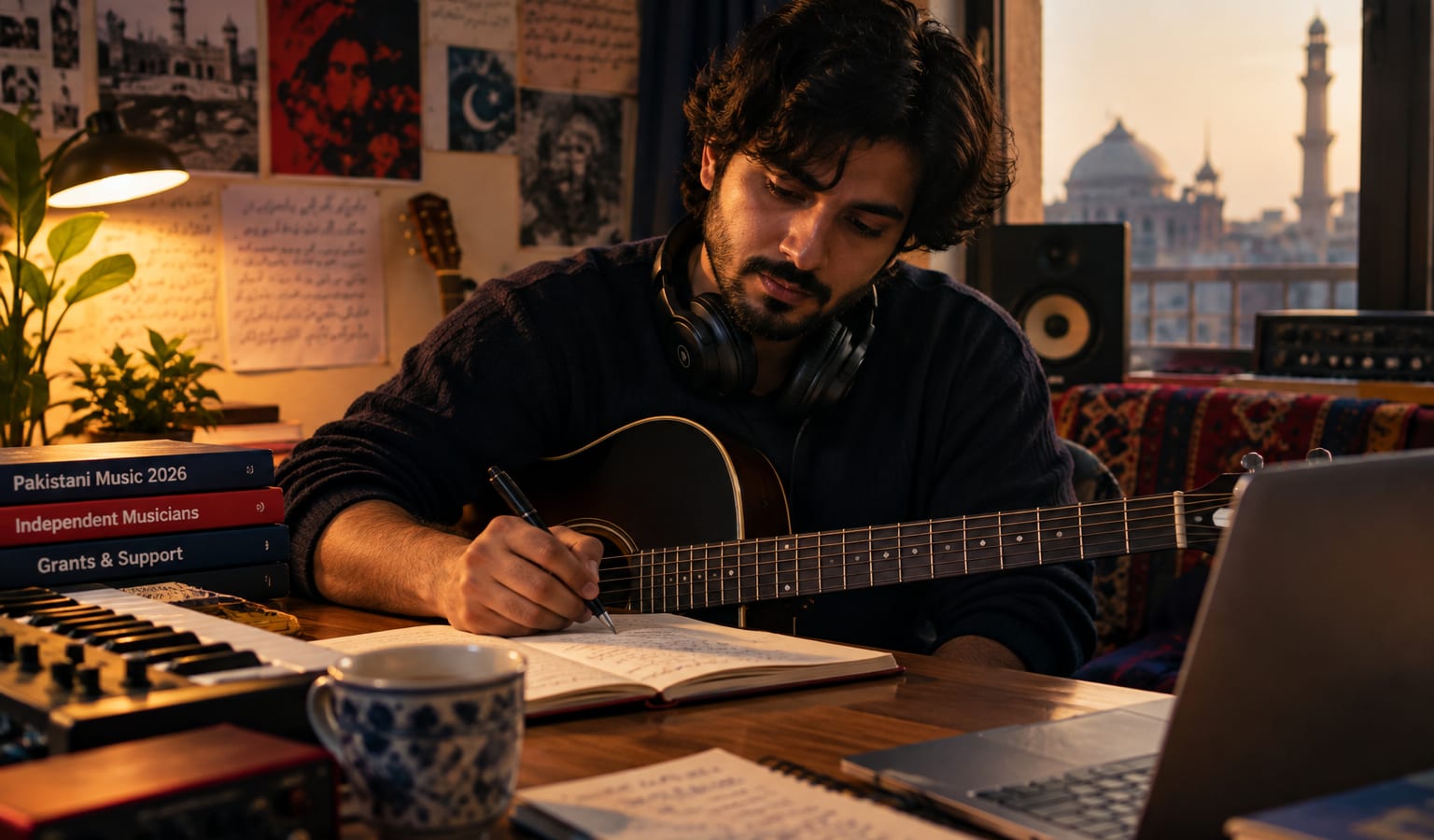
Pakistani Indie Music: Signals Worth Following Right Now
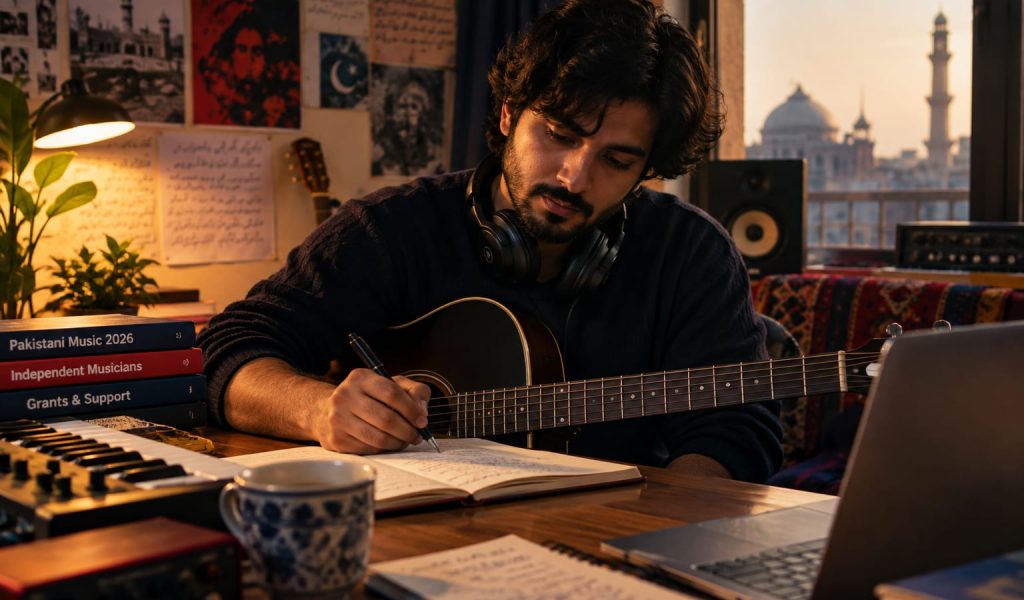
Pakistani indie music is having a louder year without always sounding louder. Outside the chart cycle, artists are shipping songs that feel local in language and reference, yet travel because the writing is specific. If you are trying to follow the scene — as a listener, songwriter, or independent artist — the useful move is not to chase every release. It is to notice the signals that keep repeating across strong tracks.
This piece is a reading of those signals: what “indie” tends to mean in Pakistan’s current independent circuit, which habits separate memorable songs from disposable uploads, and how to listen so you catch the craft instead of only the vibe.
What “Pakistani indie” actually points to
In practice, Pakistani indie is less a single sound than a working condition. Artists fund sessions themselves, release on their own timelines, and often write across Urdu, Punjabi, English, and the everyday mix people already speak. The best of it does not apologize for that mix. It uses it.
You will hear bedroom pop, soft rock, electronic sketches, acoustic confessionals, and songs that borrow folk contour without dressing up as heritage theatre. The shared thread is authorship: the artist is close to the writing, the arrangement choices, and the release decision. That proximity is why weak tracks feel unfinished — and why strong ones feel like someone meant every bar.
Signal 1: specificity beats “global polish”
The tracks that stick usually name a place, a time of day, a relationship dynamic, or a social pressure you can recognize without a press release. Vague sadness travels poorly. Concrete detail travels farther than another layer of reverb.
Listen for lyrics that could only come from this scene’s emotional weather — family expectation, city nights, bilingual punchlines, the gap between how people speak and how they perform online. When a song risks that specificity, it starts sounding like Pakistani indie rather than a generic “indie aesthetic” export.
Signal 2: bilingual texture used as craft, not costume
Code-switching is normal in the audience. The interesting signal is when language change does musical work: a softer English line against a denser Urdu verse, a Punjabi hook that carries the body of the song, or a chorus that stays plain so the verses can be denser.
What does not work as well is decorative bilingualism — flipping languages every four bars without changing emotion or rhythm. If you are writing, try the opposite: write the honest draft in one voice first, then add the second language only where it sharpens the same feeling.
Signal 3: small-room releases with a clear point of view
Many of the stronger independent releases now arrive without a giant campaign. A short visual, a tight caption, a song that already has a center. The signal is not “DIY for its own sake.” It is finish quality relative to ambition: one strong hook, a coherent arrangement, and a cover or video that matches the song’s temperature.
When an artist ships three half-finished ideas in a month, the feed forgets them. When they ship one finished feeling, listeners remember who to follow. That pattern is one of the clearest tells in Pakistani indie music right now.
How to listen for the real signal
Give a song three passes. First, map the structure — where the hook lands, where energy drops, whether the ending earns itself. Second, listen for language: which words carry the weight, and which are filler. Third, notice what the song withholds. In this scene, the withheld detail is often what makes the emotion land.
Writers can borrow that restraint directly. Draft the plain version. Then keep only the images that sharpen the same emotion. Close the listen by naming one line you would keep and one you would cut. That single edit teaches more about the current indie standard than another unread playlist.
What artists often misread
A common mistake is treating “indie” as a brand costume — lo-fi filters, vague melancholy, no center — instead of a commitment to a point of view. Another is expanding scope before the song’s core answer is solid. If you cannot explain the song’s promise in three sentences, the arrangement will not save it.
A third misread is copying advice that ignores local listening habits. Tips written for a different market’s playlist game will not automatically map onto bilingual audiences, WhatsApp-forward culture, or the way live rooms still make careers here. Borrow methods, then rewrite them inside your actual constraints: time, budget, collaborators, and the listeners you can already reach.
A practical filter for what to follow next
When a new Pakistani indie release hits your feed, ask three questions. Does the song have a clear emotional job? Does the language feel lived-in rather than performed? Would you remember the artist’s name after one listen? If two answers are yes, follow the artist — not just the track.
For artists, turn the same filter inward before you release. Name the outcome you want this week (a finished demo, a rewritten chorus, one honest video). Rank constraints honestly. Ship one closed loop. Progress in this scene still comes from finished attempts more than from collecting unread theory.
Where this leaves the listener
Pakistani indie music is worth following right now because the better songs are not waiting for permission. They are testing how far local detail can travel when the writing is sharp and the release is intentional. You do not need to hear everything. You need a better ear for the signals: specificity, bilingual craft used with purpose, and small releases that sound finished on purpose.
Stay with the artists who keep those signals consistent. The scene will keep moving. The craft tells will stay useful.
A concrete listening scenario
Example: Imagine a listener who opens a new release on a Tuesday night. The cover is quiet. The caption is short. On the first listen, the chorus feels plain — almost unfinished. On the second listen, you notice the verse names a specific hour and a specific pressure at home. On the third listen, the bilingual hook stops sounding like decoration and starts sounding like the emotional turn the song needed. That three-pass habit is how Pakistani indie music rewards attention: the surface is calm, the craft is in the details that only show up when you stop skimming.
Writers can copy that method without copying anyone’s melody. Draft the plain version. Keep one image that could only belong to your city or your relationship dynamic. Cut the second metaphor if it only sounds “indie.” Then decide whether an Urdu or Punjabi line earns its place by changing the pressure of the lyric, not by proving you can code-switch.
Release habits that travel without a campaign budget
Independent artists in this scene often cannot buy weeks of playlist attention. What works instead is finish quality relative to ambition. One coherent arrangement. One visual that matches the song’s temperature. One caption that tells listeners what the song is doing emotionally. When those three pieces align, a small release can travel through WhatsApp forwards and late-night shares more reliably than a louder, less finished drop.
If you are planning a release this month, rank constraints honestly: time, collaborators, mixing budget, and the audience you can already reach. Then ship one closed loop — demo to mix to cover to publish — instead of opening three half-finished ideas. That discipline shows up again and again in the Pakistani indie tracks that listeners remember by artist name, not only by algorithm playlist.
Limitations and honest boundaries
This guide is a listening and craft filter, not a chart prediction tool. Scenes move. Platforms change. A signal that is useful in 2026 may weaken if distribution habits shift. Individual taste still matters: a song can pass every craft check and still not be for you. Treat the signals as a way to listen more carefully, not as proof that every independent Pakistani release will break through.
Also, bilingual craft is not a requirement. Some of the strongest independent work stays in one language with total clarity. The point is purposeful language choice, not obligatory mixing. If a monolingual draft is honest, keep it. Add a second language only when it sharpens the same feeling.
Frequently asked questions
What does Pakistani indie music usually mean?
It usually points to independent authorship — artists funding sessions, setting release timing, and staying close to the writing — more than one single genre sound.
How should listeners follow Pakistani indie without drowning in releases?
Use a three-pass listen and follow artists who repeat specificity, purposeful language choices, and finished small releases instead of chasing every upload.
What should independent artists prioritize before releasing?
A clear emotional job for the song, language that feels lived-in, and one closed finish loop from demo to mix to cover to publish.
Related reading on Farro
- The New Sound of Pakistan: 15 Artists Shaping Pakistani Music in 2026
- Pakistani Music in 2026: The Songs, Sounds and Independent Artists Shaping a New Era
- Building A Release Plan For Independent Artists
- Urdu–Punjabi Songwriting for Love Songs
What to do next
Pick one new Pakistani indie release this week. Give it three listens. Write down one specific image, one language choice, and one finish decision you would keep for your own work. If you are releasing soon, use the same three questions before you ship: clear emotional job, lived-in language, memorable artist identity. Then close the loop — one finished attempt beats a folder of unfinished mood boards.