
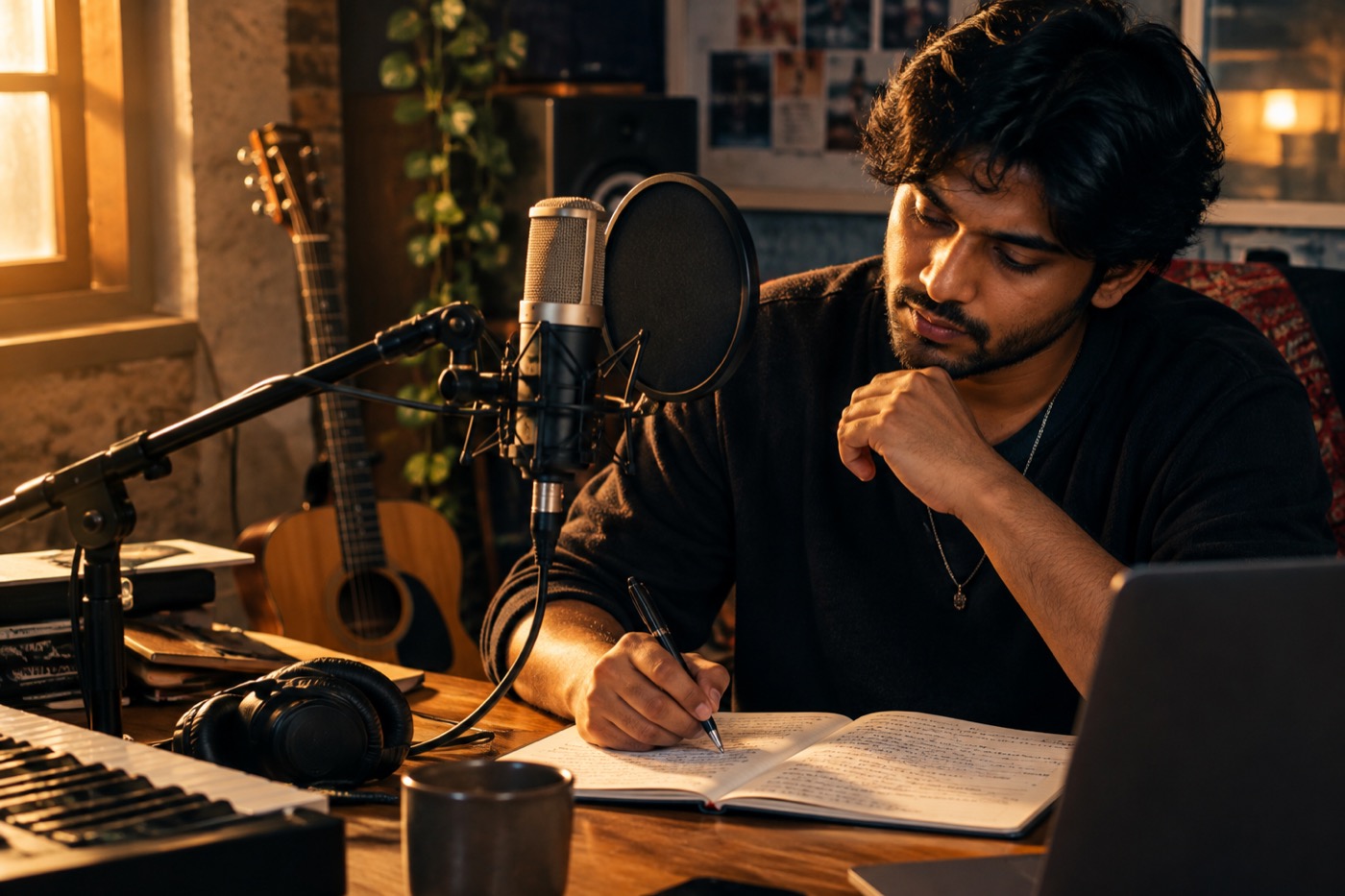
Microphone Technique for Vocalists
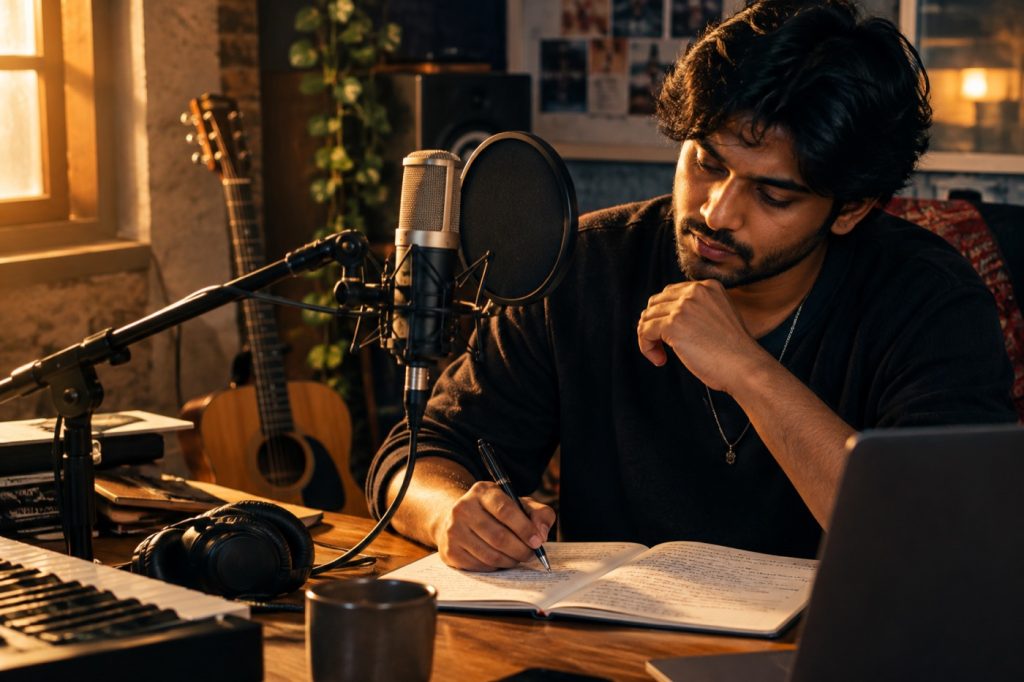
Microphone technique for vocalists is the set of distance, angle, and dynamics habits that keep a performance clear without relying on heavy processing. This guide is for singers tracking at home or on small stages.
Set distance before you chase EQ
Start with the capsule about a hand-width from your lips for most cardioid condensers. Closer than that boosts proximity bass; farther than that invites room noise and forced volume.
Mark the distance with a strip of tape on the stand once it feels right. Consistency across takes matters more than a theoretically perfect starting point.
If you move between whisper and belt, practice a small lean rather than a large step so pitch and tone stay connected.
Test the same phrase at three distances and keep the take where consonants stay intelligible without harsh esses.
Angle the capsule to control sibilance
Aim slightly off-axis — often ten to twenty degrees — so plosives and sibilants skim past the diaphragm instead of hitting it square.
A good pop filter helps, but angle still matters. Filters do not fix a singer who aims air straight into the capsule on every P and B.
On handheld dynamics in live rooms, keep the grille near the lips and cupping away from the body of the mic to protect gain-before-feedback.
If the lyric sheet makes you look down, raise the stand so posture stays open; slumped necks change vowel shape and pitch center.
Ride dynamics with body, not only faders
Pull back a few centimeters on loud peaks and ease in on quiet phrases. That physical ride is classic microphone technique for vocalists and reduces compressor pumping later.
Practice the ride on a single chorus until it is automatic. Recording should not be the first time you rehearse mic distance.
Leave headroom: if the meter clips when you belt, lower input gain before you rewrite the melody.
For stacked harmonies, match distance and angle take to take so the blend does not fight mismatched proximity bass.
Room and monitoring habits that protect takes
Turn monitors down enough that you are not competing with the track. Loud cans push singers sharp and closer to the mic than they realize.
Treat the first reflection points if the room is bright; technique cannot hide flutter echo on sustained vowels.
Keep water nearby and reset posture between takes. Fatigue shows up as swallowed consonants before it shows up as missed notes.
End the session by saving a reference take labeled with mic model, distance, and angle so the next day starts from evidence.
Limitations and honest boundaries
Mic models, rooms, and voices differ. Treat these distances as starting points, not universal law.
Live festival stages and untreated bedrooms need different compromises; prioritize intelligibility and pitch over textbook posture when the room fights you.
Next step
Record one chorus today at a marked distance with a slight off-axis angle, then compare it to an on-axis take. Related reading: New love songs and the Farro Music home page.